FEATURES PRICING BLOG API_DOCS LOG_IN REGISTER
KNOWLEDGE_BASE

The NextWay Blog.

Guides on Bitcoin, stablecoins, and everyday crypto payments — written for merchants who want fewer chargebacks and developers who want clean integrations.

Latest articles
₿
Uncategorized

Page list

Some page test content here. [UIUU-pages]
Developers

Automating Order Fulfillment with Payment Webhooks

Checking invoice status by hand — refreshing a dashboard, comparing order lists — works for a handful of daily orders and breaks down almost immediately after that. Webhooks (callback URLs) solve this by having the payment gateway notify your system the instant a payment's status changes, instead of your system having to ask.
Merchant guides

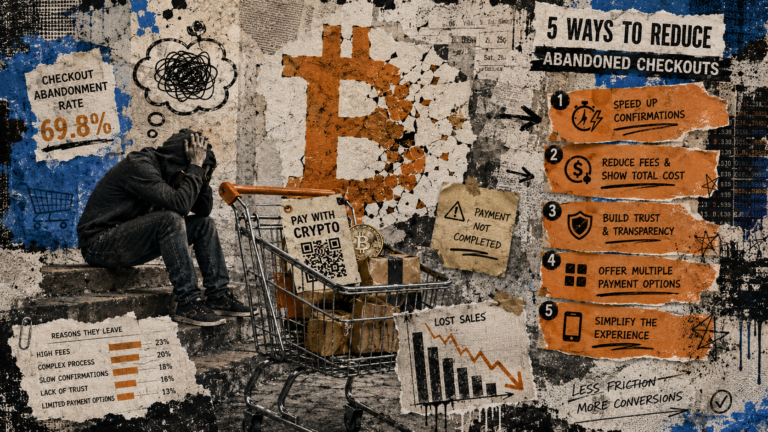
5 Ways to Reduce Abandoned Crypto Checkouts

Crypto checkout abandonment usually isn't about customers disliking crypto — most already decided to pay with it before landing on the page. What causes them to leave is confusion mid-flow: the wrong network, an unclear amount, or simply not knowing what to do next. Here are five fixes that consistently move the needle.
Merchant guides

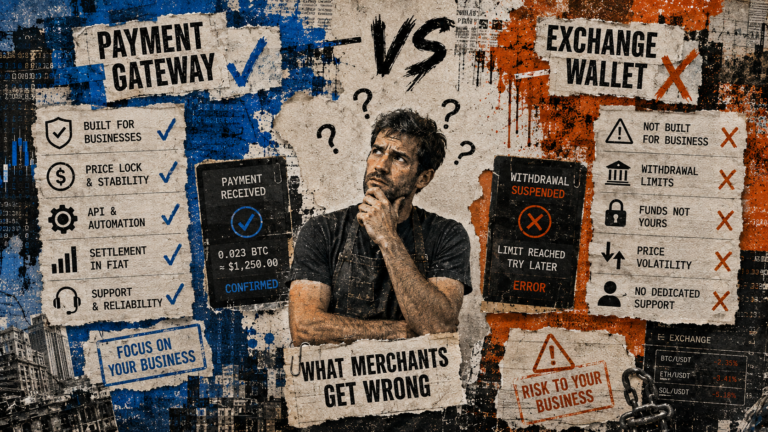
Payment Gateway vs. Exchange Wallet: What Merchants Get Wrong

It's tempting to skip a payment gateway entirely and just paste a personal wallet address into a website. It works — until the first refund request, the first accounting question, or the first time a customer sends the wrong amount. Here's what a dedicated gateway actually solves.
Crypto basics

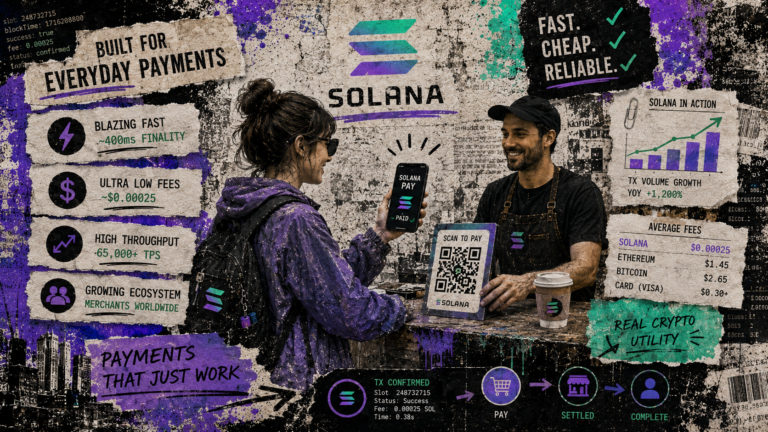
Why Solana Is Becoming a Favorite for Everyday Crypto Payments

While Bitcoin and Ethereum fees can spike unpredictably during network congestion, Solana was engineered from the ground up for a different profile: sub-cent fees and confirmation times measured in fractions of a second. That combination is quietly making it one of the fastest-growing options at crypto checkouts.
Crypto basics

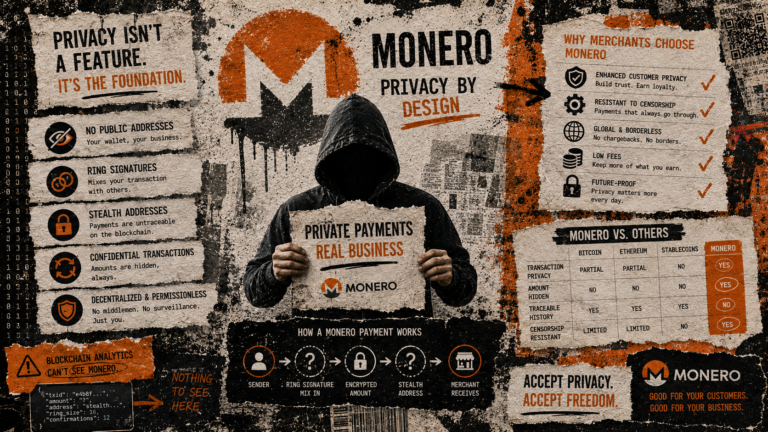
Monero Explained: What Privacy-Focused Payments Mean for Merchants

Every major cryptocurrency — Bitcoin, Ethereum, Litecoin — runs on a public ledger where anyone can look up the sender, receiver, and exact amount of any transaction. Monero (XMR) was built specifically to not work that way, and understanding why matters for any merchant deciding whether to offer it.
Crypto basics

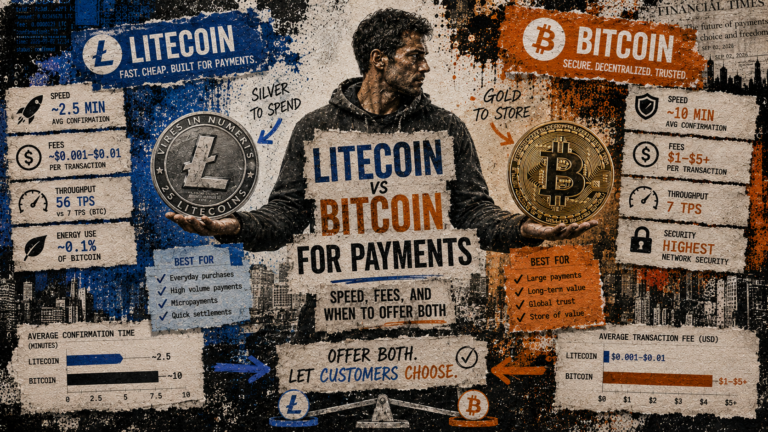
Litecoin vs Bitcoin for Payments: Speed, Fees, and When to Offer Both

Litecoin launched in 2011 as a direct fork of Bitcoin's codebase, with one explicit design goal: be faster and cheaper for everyday transactions while keeping Bitcoin's core security model. Over a decade later, that positioning still holds — and it's exactly why some merchants offer it as a companion to BTC rather than a replacement.
Crypto basics

What Are Blockchain Confirmations, and Why Does Your Payment Wait for Them?

You send a payment, the wallet shows it as broadcast, and the merchant's invoice still says "pending." That gap between "sent" and "confirmed" confuses more customers than almost anything else in crypto checkout — and it's worth explaining in plain terms.
Stablecoins

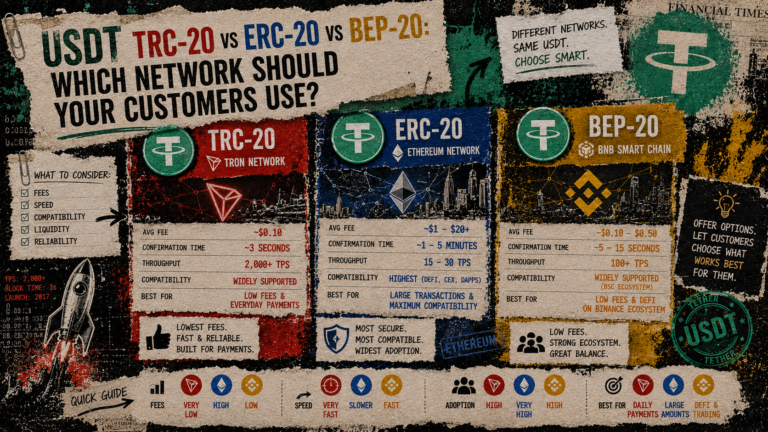
USDT TRC-20 vs ERC-20 vs BEP-20: Which Network Should Your Customers Use?

USDT is one token in name, but it doesn't live on just one blockchain. The same dollar-pegged stablecoin exists as separate, incompatible tokens on TRON (TRC-20), Ethereum (ERC-20), and BNB Chain (BEP-20) — and a growing number of other networks. Sending TRC-20 USDT to an ERC-20 address, or vice versa, doesn't just fail; funds sent to the wrong network are typically unrecoverable.
GET_STARTED
Ready to accept crypto payments?
Start free — Bitcoin and USDT enabled by default, with LTC, ETH, SOL and XMR ready to switch on.
Get started free →