
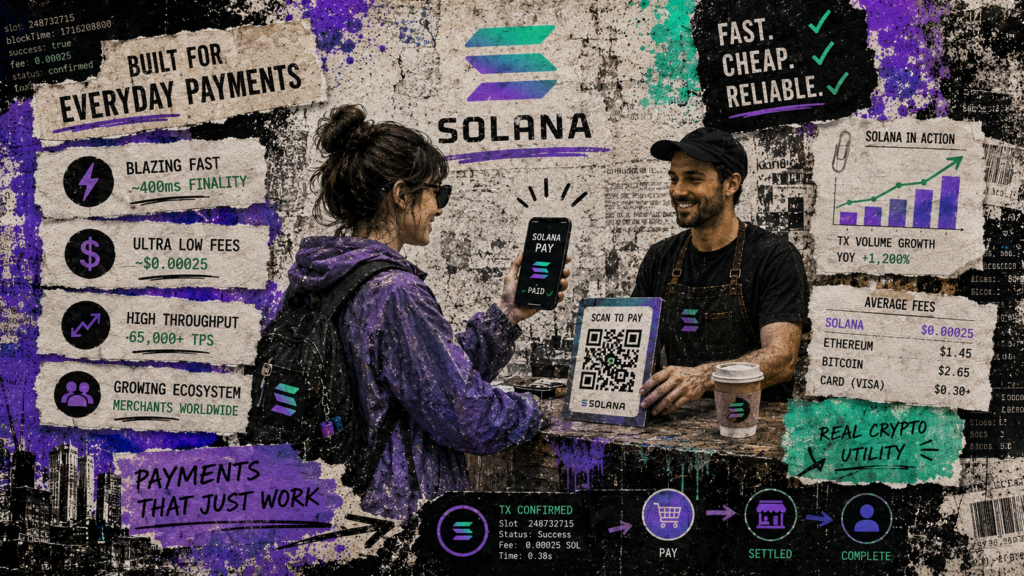
While Bitcoin and Ethereum fees can spike unpredictably during network congestion, Solana was engineered from the ground up for a different profile: sub-cent fees and confirmation times measured in fractions of a second. That combination is quietly making it one of the fastest-growing options at crypto checkouts.
The numbers that matter for payments
| Metric | Solana |
|---|---|
| Average transaction fee | Under $0.001 |
| Time to finality | Under 1 second (typically 400ms per block) |
| Throughput | Thousands of transactions per second |
Why this matters more than it sounds
For a $10 purchase, a $2 Ethereum gas fee is a 20% surcharge — enough to make many customers reconsider. A fraction-of-a-cent Solana fee is effectively invisible at any transaction size, which makes it particularly well suited to smaller, more frequent payments: tips, microtransactions, subscription renewals, and in-app purchases.
Stablecoins on Solana
USDC and USDT both have native, widely supported versions on Solana (SPL token standard), meaning merchants aren’t limited to volatile SOL if they want the network’s speed and fee advantages — the same price-stable dollar token benefits from the same fast, cheap settlement.
The tradeoff to know about
Solana’s network has, at times, experienced periods of congestion or outages during extreme demand spikes — a known growing pain of high-throughput blockchain design. For most day-to-day payment volumes this isn’t a practical concern, but it’s worth mentioning to customers who ask why you offer multiple currencies rather than relying on just one network.
Offering Solana alongside Bitcoin gives customers a genuine choice: BTC for holding value, SOL for spending it quickly and cheaply.
NextWay Pay supports SOL alongside BTC, LTC, ETH, XMR and USDT across multiple networks.