
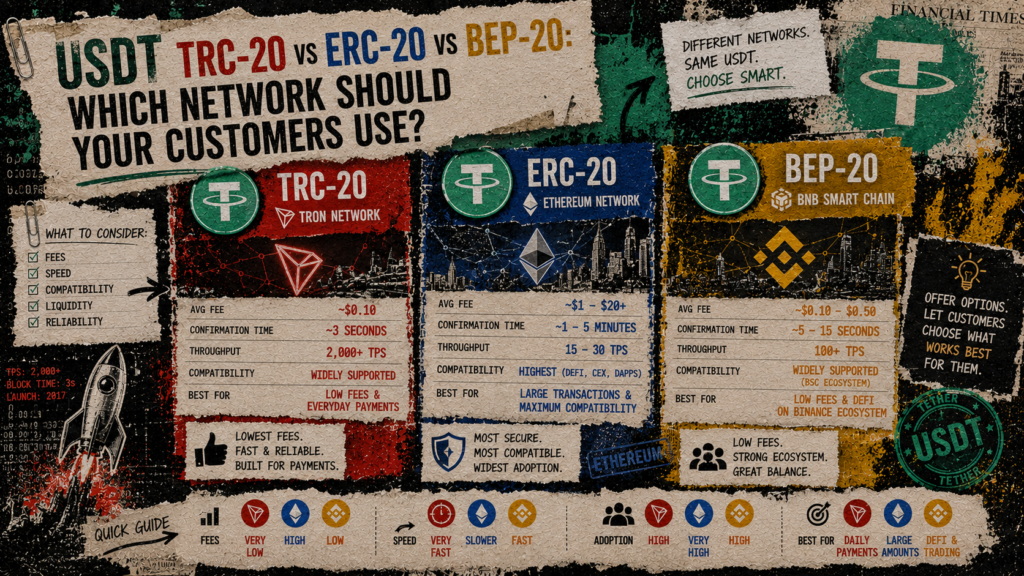
USDT is one token in name, but it doesn’t live on just one blockchain. The same dollar-pegged stablecoin exists as separate, incompatible tokens on TRON (TRC-20), Ethereum (ERC-20), and BNB Chain (BEP-20) — and a growing number of other networks. Sending TRC-20 USDT to an ERC-20 address, or vice versa, doesn’t just fail; funds sent to the wrong network are typically unrecoverable.
For merchants, this means one thing: always make the network explicit, never assume the customer knows the difference.
The three networks compared
| Network | Typical fee | Confirmation time | Best for |
|---|---|---|---|
| TRC-20 (TRON) | $0.50 – $2 | 3–10 seconds | Everyday transfers, remittances, P2P payments |
| ERC-20 (Ethereum) | $2 – $20+ | 15 sec – several minutes | DeFi interactions, large institutional transfers |
| BEP-20 (BNB Chain) | $0.10 – $0.50 | 3–5 seconds | High-frequency, low-value payments |
Why the fee gap is so large
Ethereum gas fees fluctuate with network congestion — the more activity on-chain, the more expensive every transaction becomes, sometimes spiking well above $20 during peak demand. TRON and BNB Chain were built with different throughput models, so they consistently process transfers at a fraction of the cost. None of this is a judgment on which network is “better” — Ethereum still has the deepest DeFi ecosystem and the widest wallet support. It’s simply a different tool for a different job.
How to tell which network a customer needs
- Address format is the fastest tell. TRON addresses start with the letter
T. Ethereum and BNB Chain addresses both start with0x— which is exactly why address format alone isn’t enough to confirm the network. - Ask which wallet they’re using. Exchange wallets and apps like Trust Wallet typically let the user pick the network explicitly before generating a deposit address.
- When in doubt, default to TRC-20. It has become the de facto standard for peer-to-peer and merchant payments specifically because of its low, predictable fee.
Why NextWay Pay separates each network as its own option
Grouping “USDT” as a single choice and letting the customer pick the network afterward is where most checkout mistakes happen. NextWay Pay presents TRC-20, ERC-20, and BEP-20 as distinct, clearly labeled options from the first screen — each with its own unique deposit address — so there’s no ambiguity about where funds need to go.
If a customer is unsure which network their wallet supports, TRC-20 is supported by virtually every major exchange and wallet, making it the safest default recommendation.
NextWay Pay generates a separate, unique address for every network — TRC-20, ERC-20, and BEP-20 — so customers always pay to the right chain.